¡Nuestra nueva clínica en Peachtree Corners ya está abierta! Atendiendo a familias en Norcross, Dunwoody, Sandy Springs, Duluth, Johns Creek, Alpharetta, Roswell, Suwanee, Brookhaven y áreas cercanas.

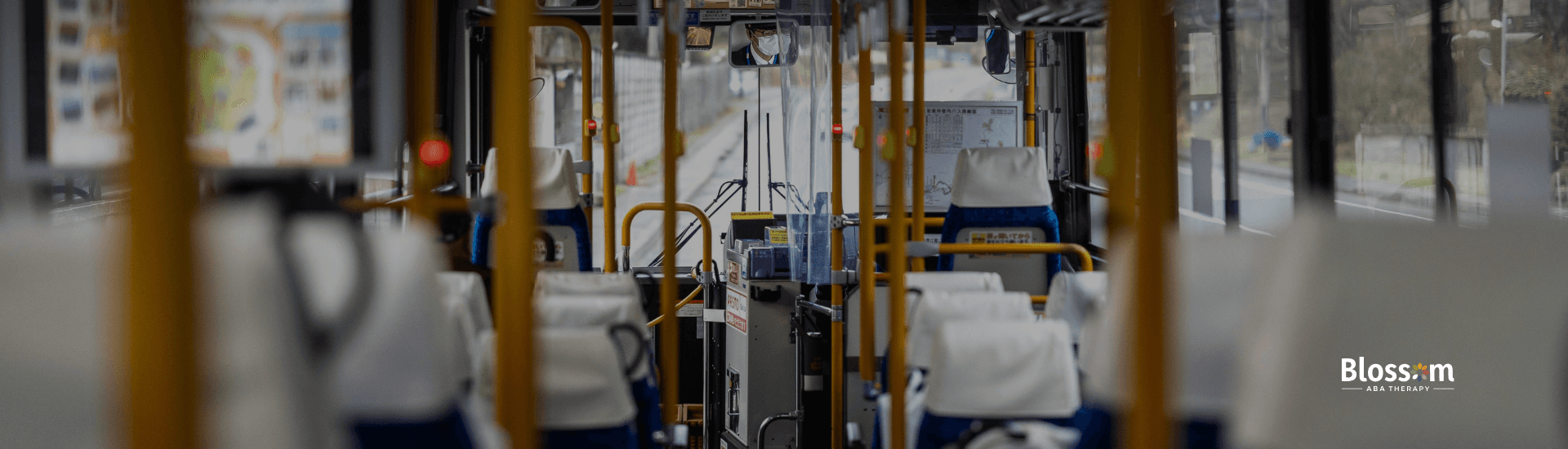
Interior view of a public bus with empty seats and handrails, representing independent public transportation skills for adolescents with autism, with Blossom ABA Therapy branding visible.

Helping Teens with Autism Navigate Buses and Trains Independently

7 ene 2026

Interior view of a public bus with empty seats and handrails, representing independent public transportation skills for adolescents with autism, with Blossom ABA Therapy branding visible.

Helping Teens with Autism Navigate Buses and Trains Independently

7 ene 2026

Interior view of a public bus with empty seats and handrails, representing independent public transportation skills for adolescents with autism, with Blossom ABA Therapy branding visible.

Helping Teens with Autism Navigate Buses and Trains Independently

7 ene 2026

Interior view of a public bus with empty seats and handrails, representing independent public transportation skills for adolescents with autism, with Blossom ABA Therapy branding visible.

Helping Teens with Autism Navigate Buses and Trains Independently

7 ene 2026

Help teens with autism gain independence using public transit. Discover step-by-step strategies for navigating buses and trains, managing anxiety, and safety tips.

Learning to use public transportation is an important life skill for adolescents with autism. Independent travel supports access to school, work, social activities, and community participation. Research shows that with structured instruction, repetition, and environmental supports, many autistic adolescents can learn to navigate buses, trains, and other public transit systems safely and independently.


Start with Foundational Skills

Assess Readiness and Safety Skills

Before introducing public transportation, professionals typically assess prerequisite skills. These include understanding basic safety rules, following multi-step directions, managing time, identifying locations, and responding appropriately to unexpected situations. Communication skills—such as asking for help or using a phone—are also important components of travel readiness.


Break Transportation Skills into Teachable Steps

Task Analysis and Visual Supports

Public transportation involves multiple steps, such as checking schedules, locating stops, paying fares, boarding, riding, and exiting at the correct location. Research supports the use of task analysis, where each step is taught individually in sequence. Visual supports like checklists, route maps, schedules, and picture cues help adolescents understand expectations and reduce confusion.


Practice in Controlled Settings

Initial instruction often begins in simulated or low-risk environments. This may include role-playing routes, practicing fare payment with mock materials, or reviewing transit videos. Gradual exposure allows learners to build familiarity before practicing in real community settings.


Use Real-World Instruction and Repetition

Community-Based Instruction

Evidence supports teaching transportation skills directly in the community. Practicing actual routes with trained support helps adolescents learn how to handle real-life variables such as crowds, delays, or route changes. Skills are often taught repeatedly across different days and times to promote generalization.


Prompting and Fading Supports

During early instruction, prompts such as verbal reminders, gestures, or visual cues are commonly used. Over time, these prompts are systematically reduced to encourage independence. Data collection helps track progress and determine when supports can be faded safely.


Teach Problem-Solving and Safety Responses

Handling Unexpected Situations

Adolescents are taught how to respond if they miss a stop, experience a schedule change, or feel unsafe. Instruction may include identifying transit staff, using emergency contacts, and following predefined safety plans. Teaching these responses is supported by research on community safety and independent living skills for individuals with autism.


Conclusion

Teaching an adolescent with autism to use public transportation independently involves structured instruction, real-world practice, and consistent safety planning. Evidence-based strategies such as task analysis, visual supports, community-based teaching, and gradual fading of assistance help build reliable travel skills that support long-term independence and community access.

At Blossom ABA, we help adolescents across Georgia, Tennessee, Virginia, North Carolina, and Maryland build functional life skills, including independent transportation use. Our ABA programs focus on practical, real-world instruction that supports safety, confidence, and independence in everyday community settings.


FAQs

Q: Can adolescents with autism learn to use public transportation independently?
Yes. Research shows that many adolescents with autism can acquire independent travel skills through structured, evidence-based instruction.

Q: What teaching methods are most effective?
Task analysis, visual supports, community-based instruction, and systematic prompting with gradual fading are widely supported methods.

Q: How long does it take to learn public transportation skills?
Skill acquisition varies depending on individual abilities, route complexity, and consistency of instruction.

Q: Is safety training necessary?
Yes. Teaching safety rules, emergency responses, and help-seeking skills is a critical component of independent travel instruction.


-


Sources:

  • https://www.autism.org.uk/advice-and-guidance/what-is-autism

  • https://raisingchildren.net.au/autism/communicating-relationships/communicating/communication-asd

  • https://www.autismspeaks.org/tool-kit/autism-care-networkair-p-visual-supports-and-autism

Learning to use public transportation is an important life skill for adolescents with autism. Independent travel supports access to school, work, social activities, and community participation. Research shows that with structured instruction, repetition, and environmental supports, many autistic adolescents can learn to navigate buses, trains, and other public transit systems safely and independently.


Start with Foundational Skills

Assess Readiness and Safety Skills

Before introducing public transportation, professionals typically assess prerequisite skills. These include understanding basic safety rules, following multi-step directions, managing time, identifying locations, and responding appropriately to unexpected situations. Communication skills—such as asking for help or using a phone—are also important components of travel readiness.


Break Transportation Skills into Teachable Steps

Task Analysis and Visual Supports

Public transportation involves multiple steps, such as checking schedules, locating stops, paying fares, boarding, riding, and exiting at the correct location. Research supports the use of task analysis, where each step is taught individually in sequence. Visual supports like checklists, route maps, schedules, and picture cues help adolescents understand expectations and reduce confusion.


Practice in Controlled Settings

Initial instruction often begins in simulated or low-risk environments. This may include role-playing routes, practicing fare payment with mock materials, or reviewing transit videos. Gradual exposure allows learners to build familiarity before practicing in real community settings.


Use Real-World Instruction and Repetition

Community-Based Instruction

Evidence supports teaching transportation skills directly in the community. Practicing actual routes with trained support helps adolescents learn how to handle real-life variables such as crowds, delays, or route changes. Skills are often taught repeatedly across different days and times to promote generalization.


Prompting and Fading Supports

During early instruction, prompts such as verbal reminders, gestures, or visual cues are commonly used. Over time, these prompts are systematically reduced to encourage independence. Data collection helps track progress and determine when supports can be faded safely.


Teach Problem-Solving and Safety Responses

Handling Unexpected Situations

Adolescents are taught how to respond if they miss a stop, experience a schedule change, or feel unsafe. Instruction may include identifying transit staff, using emergency contacts, and following predefined safety plans. Teaching these responses is supported by research on community safety and independent living skills for individuals with autism.


Conclusion

Teaching an adolescent with autism to use public transportation independently involves structured instruction, real-world practice, and consistent safety planning. Evidence-based strategies such as task analysis, visual supports, community-based teaching, and gradual fading of assistance help build reliable travel skills that support long-term independence and community access.

At Blossom ABA, we help adolescents across Georgia, Tennessee, Virginia, North Carolina, and Maryland build functional life skills, including independent transportation use. Our ABA programs focus on practical, real-world instruction that supports safety, confidence, and independence in everyday community settings.


FAQs

Q: Can adolescents with autism learn to use public transportation independently?
Yes. Research shows that many adolescents with autism can acquire independent travel skills through structured, evidence-based instruction.

Q: What teaching methods are most effective?
Task analysis, visual supports, community-based instruction, and systematic prompting with gradual fading are widely supported methods.

Q: How long does it take to learn public transportation skills?
Skill acquisition varies depending on individual abilities, route complexity, and consistency of instruction.

Q: Is safety training necessary?
Yes. Teaching safety rules, emergency responses, and help-seeking skills is a critical component of independent travel instruction.


-


Sources:

  • https://www.autism.org.uk/advice-and-guidance/what-is-autism

  • https://raisingchildren.net.au/autism/communicating-relationships/communicating/communication-asd

  • https://www.autismspeaks.org/tool-kit/autism-care-networkair-p-visual-supports-and-autism

Learning to use public transportation is an important life skill for adolescents with autism. Independent travel supports access to school, work, social activities, and community participation. Research shows that with structured instruction, repetition, and environmental supports, many autistic adolescents can learn to navigate buses, trains, and other public transit systems safely and independently.


Start with Foundational Skills

Assess Readiness and Safety Skills

Before introducing public transportation, professionals typically assess prerequisite skills. These include understanding basic safety rules, following multi-step directions, managing time, identifying locations, and responding appropriately to unexpected situations. Communication skills—such as asking for help or using a phone—are also important components of travel readiness.


Break Transportation Skills into Teachable Steps

Task Analysis and Visual Supports

Public transportation involves multiple steps, such as checking schedules, locating stops, paying fares, boarding, riding, and exiting at the correct location. Research supports the use of task analysis, where each step is taught individually in sequence. Visual supports like checklists, route maps, schedules, and picture cues help adolescents understand expectations and reduce confusion.


Practice in Controlled Settings

Initial instruction often begins in simulated or low-risk environments. This may include role-playing routes, practicing fare payment with mock materials, or reviewing transit videos. Gradual exposure allows learners to build familiarity before practicing in real community settings.


Use Real-World Instruction and Repetition

Community-Based Instruction

Evidence supports teaching transportation skills directly in the community. Practicing actual routes with trained support helps adolescents learn how to handle real-life variables such as crowds, delays, or route changes. Skills are often taught repeatedly across different days and times to promote generalization.


Prompting and Fading Supports

During early instruction, prompts such as verbal reminders, gestures, or visual cues are commonly used. Over time, these prompts are systematically reduced to encourage independence. Data collection helps track progress and determine when supports can be faded safely.


Teach Problem-Solving and Safety Responses

Handling Unexpected Situations

Adolescents are taught how to respond if they miss a stop, experience a schedule change, or feel unsafe. Instruction may include identifying transit staff, using emergency contacts, and following predefined safety plans. Teaching these responses is supported by research on community safety and independent living skills for individuals with autism.


Conclusion

Teaching an adolescent with autism to use public transportation independently involves structured instruction, real-world practice, and consistent safety planning. Evidence-based strategies such as task analysis, visual supports, community-based teaching, and gradual fading of assistance help build reliable travel skills that support long-term independence and community access.

At Blossom ABA, we help adolescents across Georgia, Tennessee, Virginia, North Carolina, and Maryland build functional life skills, including independent transportation use. Our ABA programs focus on practical, real-world instruction that supports safety, confidence, and independence in everyday community settings.


FAQs

Q: Can adolescents with autism learn to use public transportation independently?
Yes. Research shows that many adolescents with autism can acquire independent travel skills through structured, evidence-based instruction.

Q: What teaching methods are most effective?
Task analysis, visual supports, community-based instruction, and systematic prompting with gradual fading are widely supported methods.

Q: How long does it take to learn public transportation skills?
Skill acquisition varies depending on individual abilities, route complexity, and consistency of instruction.

Q: Is safety training necessary?
Yes. Teaching safety rules, emergency responses, and help-seeking skills is a critical component of independent travel instruction.


-


Sources:

  • https://www.autism.org.uk/advice-and-guidance/what-is-autism

  • https://raisingchildren.net.au/autism/communicating-relationships/communicating/communication-asd

  • https://www.autismspeaks.org/tool-kit/autism-care-networkair-p-visual-supports-and-autism

Learning to use public transportation is an important life skill for adolescents with autism. Independent travel supports access to school, work, social activities, and community participation. Research shows that with structured instruction, repetition, and environmental supports, many autistic adolescents can learn to navigate buses, trains, and other public transit systems safely and independently.


Start with Foundational Skills

Assess Readiness and Safety Skills

Before introducing public transportation, professionals typically assess prerequisite skills. These include understanding basic safety rules, following multi-step directions, managing time, identifying locations, and responding appropriately to unexpected situations. Communication skills—such as asking for help or using a phone—are also important components of travel readiness.


Break Transportation Skills into Teachable Steps

Task Analysis and Visual Supports

Public transportation involves multiple steps, such as checking schedules, locating stops, paying fares, boarding, riding, and exiting at the correct location. Research supports the use of task analysis, where each step is taught individually in sequence. Visual supports like checklists, route maps, schedules, and picture cues help adolescents understand expectations and reduce confusion.


Practice in Controlled Settings

Initial instruction often begins in simulated or low-risk environments. This may include role-playing routes, practicing fare payment with mock materials, or reviewing transit videos. Gradual exposure allows learners to build familiarity before practicing in real community settings.


Use Real-World Instruction and Repetition

Community-Based Instruction

Evidence supports teaching transportation skills directly in the community. Practicing actual routes with trained support helps adolescents learn how to handle real-life variables such as crowds, delays, or route changes. Skills are often taught repeatedly across different days and times to promote generalization.


Prompting and Fading Supports

During early instruction, prompts such as verbal reminders, gestures, or visual cues are commonly used. Over time, these prompts are systematically reduced to encourage independence. Data collection helps track progress and determine when supports can be faded safely.


Teach Problem-Solving and Safety Responses

Handling Unexpected Situations

Adolescents are taught how to respond if they miss a stop, experience a schedule change, or feel unsafe. Instruction may include identifying transit staff, using emergency contacts, and following predefined safety plans. Teaching these responses is supported by research on community safety and independent living skills for individuals with autism.


Conclusion

Teaching an adolescent with autism to use public transportation independently involves structured instruction, real-world practice, and consistent safety planning. Evidence-based strategies such as task analysis, visual supports, community-based teaching, and gradual fading of assistance help build reliable travel skills that support long-term independence and community access.

At Blossom ABA, we help adolescents across Georgia, Tennessee, Virginia, North Carolina, and Maryland build functional life skills, including independent transportation use. Our ABA programs focus on practical, real-world instruction that supports safety, confidence, and independence in everyday community settings.


FAQs

Q: Can adolescents with autism learn to use public transportation independently?
Yes. Research shows that many adolescents with autism can acquire independent travel skills through structured, evidence-based instruction.

Q: What teaching methods are most effective?
Task analysis, visual supports, community-based instruction, and systematic prompting with gradual fading are widely supported methods.

Q: How long does it take to learn public transportation skills?
Skill acquisition varies depending on individual abilities, route complexity, and consistency of instruction.

Q: Is safety training necessary?
Yes. Teaching safety rules, emergency responses, and help-seeking skills is a critical component of independent travel instruction.


-


Sources:

  • https://www.autism.org.uk/advice-and-guidance/what-is-autism

  • https://raisingchildren.net.au/autism/communicating-relationships/communicating/communication-asd

  • https://www.autismspeaks.org/tool-kit/autism-care-networkair-p-visual-supports-and-autism

Helping Teens with Autism Navigate Buses and Trains Independently | Blossom ABA

Helping Teens with Autism Navigate Buses and Trains Independently | Blossom ABA

¿Buscas apoyo?
¡Estamos aquí para ayudar!

Nuestros profesionales dedicados se especializan en terapia ABA para fomentar el crecimiento y la felicidad de su hijo. Estamos aquí para proporcionar la atención y el cuidado personalizado que su hijo merece. Póngase en contacto para conocer cómo podemos apoyar el viaje de su familia.

Conéctate con nuestros expertos en ABA hoy.

¿TE APASIONA AYUDAR A LOS NIÑOS?

¿TE APASIONA AYUDAR A LOS NIÑOS?

Únete a nuestro equipo

Únete a nuestro equipo

Únete a nuestro equipo

Únete a nuestro equipo

Blossom Therapy busca constantemente BCBAs y RBTs calificados para ocupar puestos a tiempo completo y parcial.

Blossom Therapy busca constantemente BCBAs y RBTs calificados para ocupar puestos a tiempo completo y parcial.

Blossom Therapy busca constantemente BCBAs y RBTs calificados para ocupar puestos a tiempo completo y parcial.

Blossom Therapy busca constantemente BCBAs y RBTs calificados para ocupar puestos a tiempo completo y parcial.

TERAPIA ABA

TERAPIA ABA

TERAPIA ABA

TERAPIA ABA

Obtén terapia ABA para tu hijo

Obtén terapia ABA para tu hijo

Obtén terapia ABA para tu hijo

Obtén terapia ABA para tu hijo

Empoderando el Progreso: Navegando la Terapia ABA para el Desarrollo de Su Hijo