
¡Nuestra nueva clínica en Peachtree Corners ya está abierta! Atendiendo a familias en Norcross, Dunwoody, Sandy Springs, Duluth, Johns Creek, Alpharetta, Roswell, Suwanee, Brookhaven y áreas cercanas.

¡Nuestra nueva clínica en Peachtree Corners ya está abierta! Atendiendo a familias en Norcross, Dunwoody, Sandy Springs, Duluth, Johns Creek, Alpharetta, Roswell, Suwanee, Brookhaven y áreas cercanas.

¡Nuestra nueva clínica en Peachtree Corners ya está abierta! Atendiendo a familias en Norcross, Dunwoody, Sandy Springs, Duluth, Johns Creek, Alpharetta, Roswell, Suwanee, Brookhaven y áreas cercanas.

evaluations-in-aba

What Happens at an ABA Therapy Evaluation? A Step-by-Step Guide for Parents

evaluations-in-aba

What Happens at an ABA Therapy Evaluation? A Step-by-Step Guide for Parents

Written By:

Written By:

Written By:

Tyrell Washington

Culturally Responsive ABA Advocate

Not sure what an ABA evaluation involves? Here's who's in the room, what your child does, how long it takes, and the realistic timeline to a first session.

If you've just contacted a provider about getting your child started with ABA therapy, you've probably been told the first step is an evaluation. And if you haven't done one before, that word can feel clinical, intimidating, or just uncertain — like something is being done to your child rather than for your family.

It's actually much gentler than that.

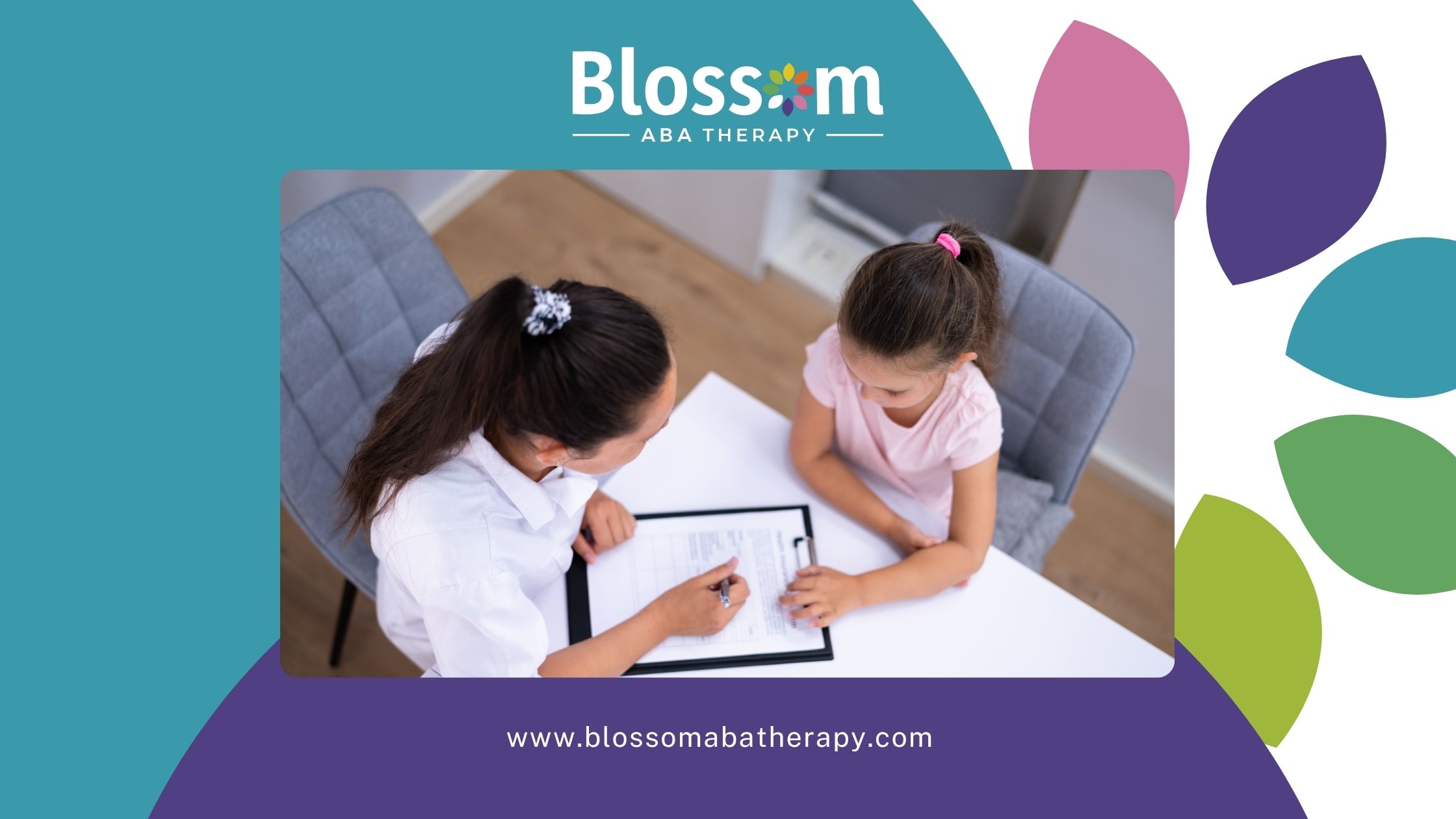
This guide walks through exactly what happens at an ABA therapy evaluation: who is in the room, what your child will be doing, what you'll be asked, how long it takes, what the results look like, and the realistic timeline from that first visit to your child's first therapy session. By the time you finish reading this, there should be no surprises.

First: understand there are two different evaluations

This is the most common point of confusion, and it's worth clearing up before anything else.

An autism diagnostic evaluation is conducted by a psychologist, developmental pediatrician, or neuropsychologist. This is what produces an autism diagnosis. Insurance requires a confirmed diagnosis before authorizing ABA therapy.

An ABA therapy assessment is conducted by a Board Certified Behavior Analyst (BCBA). This happens after the autism diagnosis is confirmed and produces your child's individualized ABA treatment plan. It is what Blossom completes before your child's first therapy session begins.

Some families arrive at Blossom with a diagnosis already in hand and just need the ABA assessment. Others need both. Blossom offers autism assessment and diagnosis services in Georgia, Tennessee, Virginia, and Maryland, with results typically available within 30 days.

The autism diagnostic evaluation

Who conducts it

A licensed psychologist, neuropsychologist, or developmental pediatrician — a clinical professional with specialized training in autism diagnosis. This is not the same person as your child's future ABA therapist.

Who is in the room

Usually you, your child, and the clinician. Siblings typically don't attend. Some settings have an observation room where a second clinician watches through a one-way window, but this varies by provider.

What happens, step by step

Before the appointment: You'll receive questionnaires to complete in advance — typically a developmental history form and a standardized parent-report measure. These assess your child's communication, daily living skills, socialization, and motor skills. They can take 45 minutes to an hour to complete. Accurate answers matter more than fast ones — the clinician builds their picture of your child largely from what you provide here.

The parent interview (45–90 minutes): The clinician sits with you and asks detailed questions about your child's development. When did they first speak? Did they point to sharing things with you, or mainly to request things? How do they respond to their name? What do their friendships look like? What's happening when behavior is most challenging?

This part is more extensive than most parents expect. You are the expert on your child, and the clinician is building their understanding from what you know. Take your time. There is no wrong answer.

The structured observation and direct assessment (1–3 hours): This is where your child interacts directly with the clinician. It looks like play. The clinician sets up activities — puzzles, books, toys, social games — and observes how your child communicates, initiates joint attention, responds to social cues, and handles transitions. The most commonly used structured tool is the ADOS-2 (Autism Diagnostic Observation Schedule, Second Edition), which has four modules matched to the child's language level and age.

Your child will likely not know they are being evaluated. To them, they are spending time with an adult who has interesting activities.

Feedback session (approximately 60 minutes): The clinician reviews what was observed, tells you whether your child meets criteria for autism spectrum disorder, explains what that means, and provides recommendations including ABA therapy. You'll receive a written evaluation report — usually within 1–3 weeks — that serves as the diagnosis letter insurance requires before authorizing ABA.

https://www.youtube.com/watch?v=6QJVTXDiUNU 

How long the whole thing takes

A typical autism diagnostic evaluation takes 3 to 5 hours total, sometimes spread across two appointments.

What to bring

Any previous evaluation reports, speech or occupational therapy records, school IEPs, or pediatric developmental notes. A comfort item for your child — a favourite toy, snack, or headphones. Complete any questionnaires in advance rather than on the day. Do not coach your child on how to behave. The evaluation is designed to capture your child as they naturally are.

The ABA therapy assessment

Once a diagnosis is confirmed, the next step is the ABA assessment — what happens at Blossom before therapy begins.

Who conducts it

A Board Certified Behavior Analyst (BCBA). This is the clinician who will design and oversee your child's therapy programme. In most cases, the BCBA who conducts the assessment is the same one who will supervise ongoing treatment — so this visit is also the beginning of building that relationship.

Who is in the room

You, your child, and the BCBA. At Blossom, the assessment typically happens in your home — in the environment where your child is most comfortable and where therapy will take place. This is a meaningful difference from center-based models: the BCBA comes to you.

What happens, step by step

The parent interview: The BCBA starts by talking with you. They want to understand what a typical day looks like, where the hardest moments are, what your child loves, what triggers challenging behaviours, and what your family's priorities are for therapy. Be as specific and honest as you can — the more accurate this picture, the better the treatment plan.

Direct observation and skill assessment: The BCBA observes your child in play and may engage them directly in activities to assess current skill levels across key domains: communication and language, social skills, play skills, daily living skills, and adaptive behaviour. Common tools include the VB-MAPP (Verbal Behavior Milestones Assessment and Placement Program), ABLLS-R, or AFLS depending on your child's age and profile.

This part also looks like play to your child. The BCBA is simultaneously building rapport — beginning the process that makes therapy effective — while gathering clinical data.

Functional behaviour considerations: If your child has specific challenging behaviours — aggression, self-injury, elopement, meltdowns — the BCBA will ask detailed questions: what typically happens before, what the behaviour looks like, what happens after. This is the beginning of understanding what the behaviour is communicating and how to address it.

How long it takes

The ABA assessment typically takes 2 to 4 hours across one to two visits. Some of the assessment happens on paper — the BCBA reviews your child's diagnosis report and any previous evaluation records before the first meeting, and may send questionnaires for you to complete beforehand.

What happens after: the treatment plan

After the assessment, the BCBA writes your child's individualized treatment plan. This document outlines specific, measurable therapy goals, the strategies that will be used to achieve them, how progress will be tracked, and how many therapy hours per week are clinically recommended.

The treatment plan is submitted to your insurance for prior authorisation. Once approved — typically within 7 to 14 business days — therapy begins.

The realistic timeline from first contact to first session

Step

Typical timing

Initial contact with Blossom

Day 0

Insurance verification

Within 24 hours

Autism diagnostic evaluation (if needed)

Within 1–2 weeks of scheduling

Evaluation report received

1–3 weeks after evaluation

ABA assessment with BCBA

Within 1–2 weeks of confirmed diagnosis

Treatment plan written

Within 1 week of ABA assessment

Prior authorisation submitted

Same week as treatment plan

Prior authorisation approved

7–14 business days

First therapy session

Same week as authorisation

For families who already have an autism diagnosis, the timeline from first contact to first session is often 3 to 4 weeks. Blossom handles insurance verification and prior authorisation directly — you don't manage any of that paperwork.

What your child might feel — and what's normal

Some children are completely unfazed. They engage happily with a new adult who has interesting toys and don't register anything unusual about the day.

Some children find the evaluation environment harder — a new person, an unfamiliar setting, unpredictable activities. They might be quieter than usual, refuse some tasks, or have a difficult moment. This is completely fine. The evaluating clinician and the BCBA have seen this many times. A child who is dysregulated during an evaluation is still giving the clinician useful clinical information.

You do not need to apologise for how your child behaves. You do not need to manage them to perform well. Show up as you normally would, let your child be themselves, and let the clinician do their job.

What to do if you're not sure yet

An evaluation is not a commitment to start therapy. It's information — and having that information puts you in a better position to make decisions for your family, whatever you decide after.

If you're in the early stages of noticing differences in your child's development and you're not sure what the right next step is, reaching out for an evaluation is the right move. The evaluation tells you what's happening. Then you can decide what to do about it with full information.

Blossom ABA provides autism assessment and diagnosis services in Georgia, Tennessee, Virginia, and Maryland — and in-home ABA therapy across Georgia, Tennessee, Virginia, North Carolina, and Maryland. If you're ready to take the next step, or you just want to understand what the process looks like for your child specifically, our team is ready to help.

Frequently asked questions

What is an ABA therapy evaluation? 

An ABA therapy evaluation — also called an ABA assessment — is conducted by a Board Certified Behavior Analyst before therapy begins. The BCBA observes your child, interviews you about development and behaviour, assesses current skills across key developmental domains, and writes an individualized treatment plan that becomes the foundation of therapy. It is distinct from an autism diagnostic evaluation, which is conducted by a psychologist or developmental pediatrician to determine whether your child has autism.

Does my child need an autism diagnosis before the ABA evaluation? 

Yes. Insurance requires a confirmed autism spectrum disorder diagnosis before authorizing ABA therapy. If your child does not yet have a diagnosis, that step comes first. Blossom offers autism assessment and diagnosis services in Georgia, Tennessee, Virginia, and Maryland.

How long does an ABA evaluation take? 

The ABA assessment typically takes 2 to 4 hours across one to two visits. The autism diagnostic evaluation that may precede it typically takes 3 to 5 hours. Some of the assessment process involves questionnaires completed beforehand, which take 45 minutes to an hour.

Will my child know they are being evaluated? 

No — not in any way that should concern you or them. The assessment involves play-based interaction and observation. To your child, they are spending time with an adult who has interesting activities. There is nothing to pass or fail.

How long after the evaluation does therapy start? 

For families who already have a diagnosis, the typical timeline from ABA assessment to first therapy session is 3 to 6 weeks — including time to write the treatment plan and obtain insurance prior authorisation. Blossom verifies your insurance before the assessment and handles prior authorisation directly.

What if my child doesn't cooperate during the evaluation? 

That is completely expected and does not disqualify your child or invalidate the evaluation. Evaluators work with children across every level of cooperation. A child who is dysregulated, quiet, or reluctant is still providing clinical information. You do not need to manage your child into performing well.

Do I need a referral to schedule an evaluation with Blossom? 

No referral is needed. Contact Blossom directly and our team will walk you through what's needed to get started, including verifying your insurance within 24 hours.

Sources

  1. Behavior Analyst Certification Board. BCBA certification requirements. https://www.bacb.com/bcba/

  2. American Psychiatric Association. DSM-5-TR: Autism Spectrum Disorder. https://www.psychiatry.org/psychiatrists/practice/dsm

  3. Autism Speaks. Applied Behavior Analysis (ABA). https://www.autismspeaks.org/applied-behavior-analysis

  4. VB-MAPP. Verbal Behavior Milestones Assessment and Placement Program. https://www.vbmappapp.com/home

If you've just contacted a provider about getting your child started with ABA therapy, you've probably been told the first step is an evaluation. And if you haven't done one before, that word can feel clinical, intimidating, or just uncertain — like something is being done to your child rather than for your family.

It's actually much gentler than that.

This guide walks through exactly what happens at an ABA therapy evaluation: who is in the room, what your child will be doing, what you'll be asked, how long it takes, what the results look like, and the realistic timeline from that first visit to your child's first therapy session. By the time you finish reading this, there should be no surprises.

First: understand there are two different evaluations

This is the most common point of confusion, and it's worth clearing up before anything else.

An autism diagnostic evaluation is conducted by a psychologist, developmental pediatrician, or neuropsychologist. This is what produces an autism diagnosis. Insurance requires a confirmed diagnosis before authorizing ABA therapy.

An ABA therapy assessment is conducted by a Board Certified Behavior Analyst (BCBA). This happens after the autism diagnosis is confirmed and produces your child's individualized ABA treatment plan. It is what Blossom completes before your child's first therapy session begins.

Some families arrive at Blossom with a diagnosis already in hand and just need the ABA assessment. Others need both. Blossom offers autism assessment and diagnosis services in Georgia, Tennessee, Virginia, and Maryland, with results typically available within 30 days.

The autism diagnostic evaluation

Who conducts it

A licensed psychologist, neuropsychologist, or developmental pediatrician — a clinical professional with specialized training in autism diagnosis. This is not the same person as your child's future ABA therapist.

Who is in the room

Usually you, your child, and the clinician. Siblings typically don't attend. Some settings have an observation room where a second clinician watches through a one-way window, but this varies by provider.

What happens, step by step

Before the appointment: You'll receive questionnaires to complete in advance — typically a developmental history form and a standardized parent-report measure. These assess your child's communication, daily living skills, socialization, and motor skills. They can take 45 minutes to an hour to complete. Accurate answers matter more than fast ones — the clinician builds their picture of your child largely from what you provide here.

The parent interview (45–90 minutes): The clinician sits with you and asks detailed questions about your child's development. When did they first speak? Did they point to sharing things with you, or mainly to request things? How do they respond to their name? What do their friendships look like? What's happening when behavior is most challenging?

This part is more extensive than most parents expect. You are the expert on your child, and the clinician is building their understanding from what you know. Take your time. There is no wrong answer.

The structured observation and direct assessment (1–3 hours): This is where your child interacts directly with the clinician. It looks like play. The clinician sets up activities — puzzles, books, toys, social games — and observes how your child communicates, initiates joint attention, responds to social cues, and handles transitions. The most commonly used structured tool is the ADOS-2 (Autism Diagnostic Observation Schedule, Second Edition), which has four modules matched to the child's language level and age.

Your child will likely not know they are being evaluated. To them, they are spending time with an adult who has interesting activities.

Feedback session (approximately 60 minutes): The clinician reviews what was observed, tells you whether your child meets criteria for autism spectrum disorder, explains what that means, and provides recommendations including ABA therapy. You'll receive a written evaluation report — usually within 1–3 weeks — that serves as the diagnosis letter insurance requires before authorizing ABA.

https://www.youtube.com/watch?v=6QJVTXDiUNU 

How long the whole thing takes

A typical autism diagnostic evaluation takes 3 to 5 hours total, sometimes spread across two appointments.

What to bring

Any previous evaluation reports, speech or occupational therapy records, school IEPs, or pediatric developmental notes. A comfort item for your child — a favourite toy, snack, or headphones. Complete any questionnaires in advance rather than on the day. Do not coach your child on how to behave. The evaluation is designed to capture your child as they naturally are.

The ABA therapy assessment

Once a diagnosis is confirmed, the next step is the ABA assessment — what happens at Blossom before therapy begins.

Who conducts it

A Board Certified Behavior Analyst (BCBA). This is the clinician who will design and oversee your child's therapy programme. In most cases, the BCBA who conducts the assessment is the same one who will supervise ongoing treatment — so this visit is also the beginning of building that relationship.

Who is in the room

You, your child, and the BCBA. At Blossom, the assessment typically happens in your home — in the environment where your child is most comfortable and where therapy will take place. This is a meaningful difference from center-based models: the BCBA comes to you.

What happens, step by step

The parent interview: The BCBA starts by talking with you. They want to understand what a typical day looks like, where the hardest moments are, what your child loves, what triggers challenging behaviours, and what your family's priorities are for therapy. Be as specific and honest as you can — the more accurate this picture, the better the treatment plan.

Direct observation and skill assessment: The BCBA observes your child in play and may engage them directly in activities to assess current skill levels across key domains: communication and language, social skills, play skills, daily living skills, and adaptive behaviour. Common tools include the VB-MAPP (Verbal Behavior Milestones Assessment and Placement Program), ABLLS-R, or AFLS depending on your child's age and profile.

This part also looks like play to your child. The BCBA is simultaneously building rapport — beginning the process that makes therapy effective — while gathering clinical data.

Functional behaviour considerations: If your child has specific challenging behaviours — aggression, self-injury, elopement, meltdowns — the BCBA will ask detailed questions: what typically happens before, what the behaviour looks like, what happens after. This is the beginning of understanding what the behaviour is communicating and how to address it.

How long it takes

The ABA assessment typically takes 2 to 4 hours across one to two visits. Some of the assessment happens on paper — the BCBA reviews your child's diagnosis report and any previous evaluation records before the first meeting, and may send questionnaires for you to complete beforehand.

What happens after: the treatment plan

After the assessment, the BCBA writes your child's individualized treatment plan. This document outlines specific, measurable therapy goals, the strategies that will be used to achieve them, how progress will be tracked, and how many therapy hours per week are clinically recommended.

The treatment plan is submitted to your insurance for prior authorisation. Once approved — typically within 7 to 14 business days — therapy begins.

The realistic timeline from first contact to first session

Step

Typical timing

Initial contact with Blossom

Day 0

Insurance verification

Within 24 hours

Autism diagnostic evaluation (if needed)

Within 1–2 weeks of scheduling

Evaluation report received

1–3 weeks after evaluation

ABA assessment with BCBA

Within 1–2 weeks of confirmed diagnosis

Treatment plan written

Within 1 week of ABA assessment

Prior authorisation submitted

Same week as treatment plan

Prior authorisation approved

7–14 business days

First therapy session

Same week as authorisation

For families who already have an autism diagnosis, the timeline from first contact to first session is often 3 to 4 weeks. Blossom handles insurance verification and prior authorisation directly — you don't manage any of that paperwork.

What your child might feel — and what's normal

Some children are completely unfazed. They engage happily with a new adult who has interesting toys and don't register anything unusual about the day.

Some children find the evaluation environment harder — a new person, an unfamiliar setting, unpredictable activities. They might be quieter than usual, refuse some tasks, or have a difficult moment. This is completely fine. The evaluating clinician and the BCBA have seen this many times. A child who is dysregulated during an evaluation is still giving the clinician useful clinical information.

You do not need to apologise for how your child behaves. You do not need to manage them to perform well. Show up as you normally would, let your child be themselves, and let the clinician do their job.

What to do if you're not sure yet

An evaluation is not a commitment to start therapy. It's information — and having that information puts you in a better position to make decisions for your family, whatever you decide after.

If you're in the early stages of noticing differences in your child's development and you're not sure what the right next step is, reaching out for an evaluation is the right move. The evaluation tells you what's happening. Then you can decide what to do about it with full information.

Blossom ABA provides autism assessment and diagnosis services in Georgia, Tennessee, Virginia, and Maryland — and in-home ABA therapy across Georgia, Tennessee, Virginia, North Carolina, and Maryland. If you're ready to take the next step, or you just want to understand what the process looks like for your child specifically, our team is ready to help.

Frequently asked questions

What is an ABA therapy evaluation? 

An ABA therapy evaluation — also called an ABA assessment — is conducted by a Board Certified Behavior Analyst before therapy begins. The BCBA observes your child, interviews you about development and behaviour, assesses current skills across key developmental domains, and writes an individualized treatment plan that becomes the foundation of therapy. It is distinct from an autism diagnostic evaluation, which is conducted by a psychologist or developmental pediatrician to determine whether your child has autism.

Does my child need an autism diagnosis before the ABA evaluation? 

Yes. Insurance requires a confirmed autism spectrum disorder diagnosis before authorizing ABA therapy. If your child does not yet have a diagnosis, that step comes first. Blossom offers autism assessment and diagnosis services in Georgia, Tennessee, Virginia, and Maryland.

How long does an ABA evaluation take? 

The ABA assessment typically takes 2 to 4 hours across one to two visits. The autism diagnostic evaluation that may precede it typically takes 3 to 5 hours. Some of the assessment process involves questionnaires completed beforehand, which take 45 minutes to an hour.

Will my child know they are being evaluated? 

No — not in any way that should concern you or them. The assessment involves play-based interaction and observation. To your child, they are spending time with an adult who has interesting activities. There is nothing to pass or fail.

How long after the evaluation does therapy start? 

For families who already have a diagnosis, the typical timeline from ABA assessment to first therapy session is 3 to 6 weeks — including time to write the treatment plan and obtain insurance prior authorisation. Blossom verifies your insurance before the assessment and handles prior authorisation directly.

What if my child doesn't cooperate during the evaluation? 

That is completely expected and does not disqualify your child or invalidate the evaluation. Evaluators work with children across every level of cooperation. A child who is dysregulated, quiet, or reluctant is still providing clinical information. You do not need to manage your child into performing well.

Do I need a referral to schedule an evaluation with Blossom? 

No referral is needed. Contact Blossom directly and our team will walk you through what's needed to get started, including verifying your insurance within 24 hours.

Sources

  1. Behavior Analyst Certification Board. BCBA certification requirements. https://www.bacb.com/bcba/

  2. American Psychiatric Association. DSM-5-TR: Autism Spectrum Disorder. https://www.psychiatry.org/psychiatrists/practice/dsm

  3. Autism Speaks. Applied Behavior Analysis (ABA). https://www.autismspeaks.org/applied-behavior-analysis

  4. VB-MAPP. Verbal Behavior Milestones Assessment and Placement Program. https://www.vbmappapp.com/home

¿Buscas apoyo?
¡Estamos aquí para ayudar!

Nuestros profesionales dedicados se especializan en terapia ABA para fomentar el crecimiento y la felicidad de su hijo. Estamos aquí para proporcionar la atención y el cuidado personalizado que su hijo merece. Póngase en contacto para conocer cómo podemos apoyar el viaje de su familia.

Conéctate con nuestros expertos en ABA hoy.

¿TE APASIONA AYUDAR A LOS NIÑOS?

¿TE APASIONA AYUDAR A LOS NIÑOS?

Únete a nuestro equipo

Únete a nuestro equipo

Únete a nuestro equipo

Blossom Therapy busca constantemente BCBAs y RBTs calificados para ocupar puestos a tiempo completo y parcial.

Blossom Therapy busca constantemente BCBAs y RBTs calificados para ocupar puestos a tiempo completo y parcial.

TERAPIA ABA

TERAPIA ABA

TERAPIA ABA

Obtén terapia ABA para tu hijo

Obtén terapia ABA para tu hijo

Obtén terapia ABA para tu hijo

Empoderando el Progreso: Navegando la Terapia ABA para el Desarrollo de Su Hijo