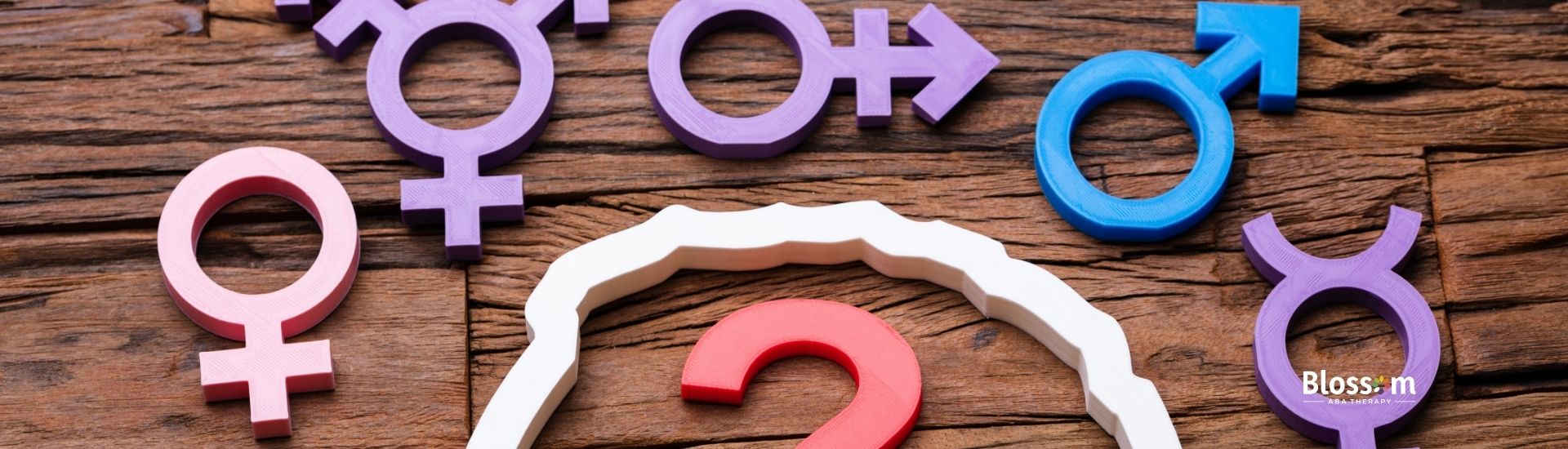

This is a topic that comes up more than families expect, and one that deserves a straightforward, research-grounded answer rather than either dismissal or alarm. Multiple independent studies, including the largest analysis conducted on this question to date, have found that autism and gender diversity co-occur at meaningfully higher rates than chance alone would predict. Understanding what the research actually shows, and doesn't, helps families respond with genuine support rather than confusion.
Research consistently finds that autistic individuals report more diverse gender identities than the general population, and that transgender and gender-diverse individuals show elevated rates of autism and autistic traits. This relationship has been replicated across multiple large, independent studies. Researchers are still working out why the overlap exists, but the co-occurrence itself is well-established, not a fringe or contested finding.
What the Research Actually Shows
The scale of this research base is worth understanding upfront. A study in Nature Communications, later confirmed as the largest analysis on this question to date after researchers examined five independent datasets, found that gender-diverse people have meaningfully higher rates of autism than cisgender people, with the association between autism and gender diversity among the strongest of several conditions studied.
A separate systematic review and meta-analysis found a pooled estimate of roughly 11% of people with gender dysphoria or gender incongruence also meeting criteria for autism, compared to a general population autism prevalence under 2%. On the other side of that same relationship, research estimates that around 15% of autistic individuals report a transgender, nonbinary, or otherwise gender-diverse identity.
This is a genuinely bidirectional finding, replicated across clinical samples, general population samples, and multiple countries, not a single small or disputed study.
Why This Overlap May Exist
Researchers are honest that the underlying mechanisms behind this connection aren't fully understood yet, and it's worth resisting the urge to settle on a single tidy explanation. According to the Autism Research Institute, the literature on this intersection has grown substantially in recent years, but a clear, agreed-upon explanation for why it exists hasn't emerged.
Some researchers have proposed that autistic individuals may experience less internal pressure to conform to typical social expectations around gender presentation, while others point to differences in how gender norms are processed and internalized more broadly. These remain genuine open research questions, not settled science, and families shouldn't expect a definitive single-cause answer.
Why This Matters at Different Developmental Stages
This intersection often becomes most visible during puberty, when body changes and social expectations around gender both intensify at once, sometimes surfacing questions that hadn't come up as clearly before.
It's also worth noting that research has found this relationship may be especially pronounced for individuals assigned female at birth, which connects to a broader, well-documented pattern: autism itself is often underrecognized in girls, partly because diagnostic criteria and clinical expectations were built largely around how autism presents in boys.
Understanding autism's presentation in adult women adds useful context here, since underrecognition and late diagnosis can complicate how this whole picture unfolds for a given individual.
The Mental Health Stakes: Why Support Matters
This isn't a purely academic question. Research has found that autistic LGBTQIA+ individuals experience significantly higher rates of mental health challenges, unmet healthcare needs, and outright refusal of services by some providers, compared to autistic individuals who are cisgender.
Contributing factors identified in the research include gender-based bullying, rejection from family or community, and the compounding difficulty of navigating providers who may understand autism but not gender-diverse identity, or vice versa. This is exactly why comprehensive, genuinely informed support matters so much, and why certain developmental stages can feel especially difficult when multiple layers of navigating identity and support needs stack on top of each other at once.
How Parents Can Support a Child Navigating Both
A few principles hold up well across the research and clinical guidance on this topic. Listen without immediately assuming an explanation, neither dismissing gender questions as "just a phase related to autism" nor assuming a definitive answer has to be reached quickly. Avoid pathologizing either identity in relation to the other; being autistic doesn't cause gender diversity, and being gender-diverse doesn't cause autism, even though the two frequently co-occur.
Seek out mental health professionals who have genuine, specific experience with both autism and gender-diverse youth, since a provider skilled in only one area may miss important context the other provides. Broader guidance on puberty and social boundaries within ABA programming can be a useful complementary resource as your family works through this alongside qualified specialists.
Where ABA Fits, and Where It Doesn't
This is worth stating plainly. ABA therapy is not gender identity therapy, and it isn't designed to direct or influence a child's gender identity in any direction. Its scope is behavioral and developmental: communication, executive function, social skills, and daily living support.
Questions specifically about gender identity and exploration belong with qualified mental health professionals who specialize in that area, ideally ones who also understand autism specifically. At Blossom, we're glad to support the behavioral and developmental side of a child's life, while making sure families are connected to the right specialized support for everything else.
We're Here for the Whole Child
Every child deserves support that sees the whole picture, not just one diagnosis in isolation. Blossom ABA Therapy provides individualized ABA services built around your child's actual developmental needs, and we're always glad to help connect families with the right additional specialists when a need falls outside our scope. If you'd like to talk through what support could look like for your family, contact us and we're glad to help.
Frequently Asked Questions
Is being autistic a cause of gender dysphoria, or vice versa?
No direct causal relationship has been established in either direction. Researchers describe this as a genuine co-occurrence with an unclear underlying mechanism, not one condition causing the other.
Should every autistic child be screened for gender identity concerns?
There's no standard recommendation for routine screening. What matters more is that parents and providers remain open and non-dismissive if a child does raise questions about gender, rather than assuming it needs to be proactively investigated in every case.
How do I find a therapist who understands both autism and gender identity?
Look specifically for mental health providers who list experience with both autism and gender-diverse youth, or ask directly during a consultation about their specific experience with this intersection, since general expertise in only one area often isn't sufficient.
Is it common for autistic kids to explore gender identity later than their peers?
Some research suggests timing and presentation can differ for autistic youth, though individual variation is significant. This is an area where an experienced, dual-informed provider can offer more specific guidance than general statistics can.
Can gender dysphoria be misdiagnosed in autistic individuals, or vice versa?
Yes, this is a recognized clinical challenge. Overlapping traits and communication differences can complicate accurate assessment in both directions, which is part of why providers with genuine experience in both areas matter so much.
Sources:
Warrier, V., et al. (2020). "Elevated rates of autism, other neurodevelopmental and psychiatric diagnoses, and autistic traits in transgender and gender-diverse individuals." Nature Communications, 11, 3959. Coverage via The Transmitter: https://www.thetransmitter.org/spectrum/largest-study-to-date-confirms-overlap-between-autism-and-gender-diversity/
Autism Research Institute, "Gender Discomfort and Autism": https://autism.org/gender-discomfort-and-autism/
Kallitsounaki, A., & Williams, D. M. (2022). "Autism Spectrum Disorder and Gender Dysphoria/Incongruence: A systematic literature review and meta-analysis." Journal of Autism and Developmental Disorders.